
TAKE YOUR TRAPPING TO NEW HEIGHTS WITH NESTGARD™
NestGard
NestGard
Couldn't load pickup availability
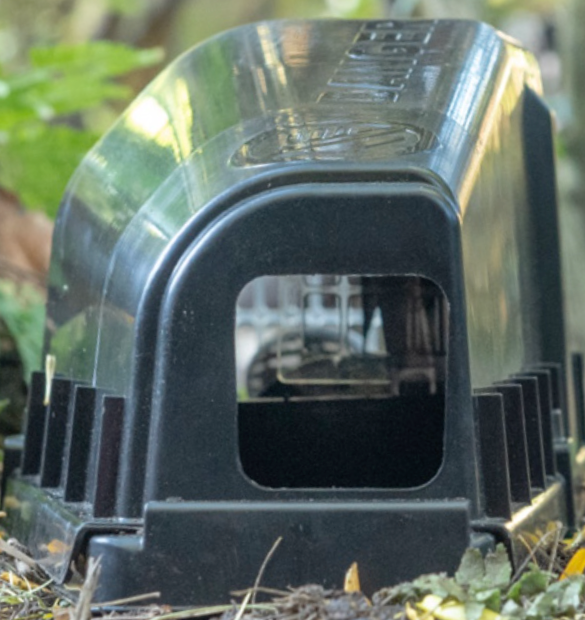
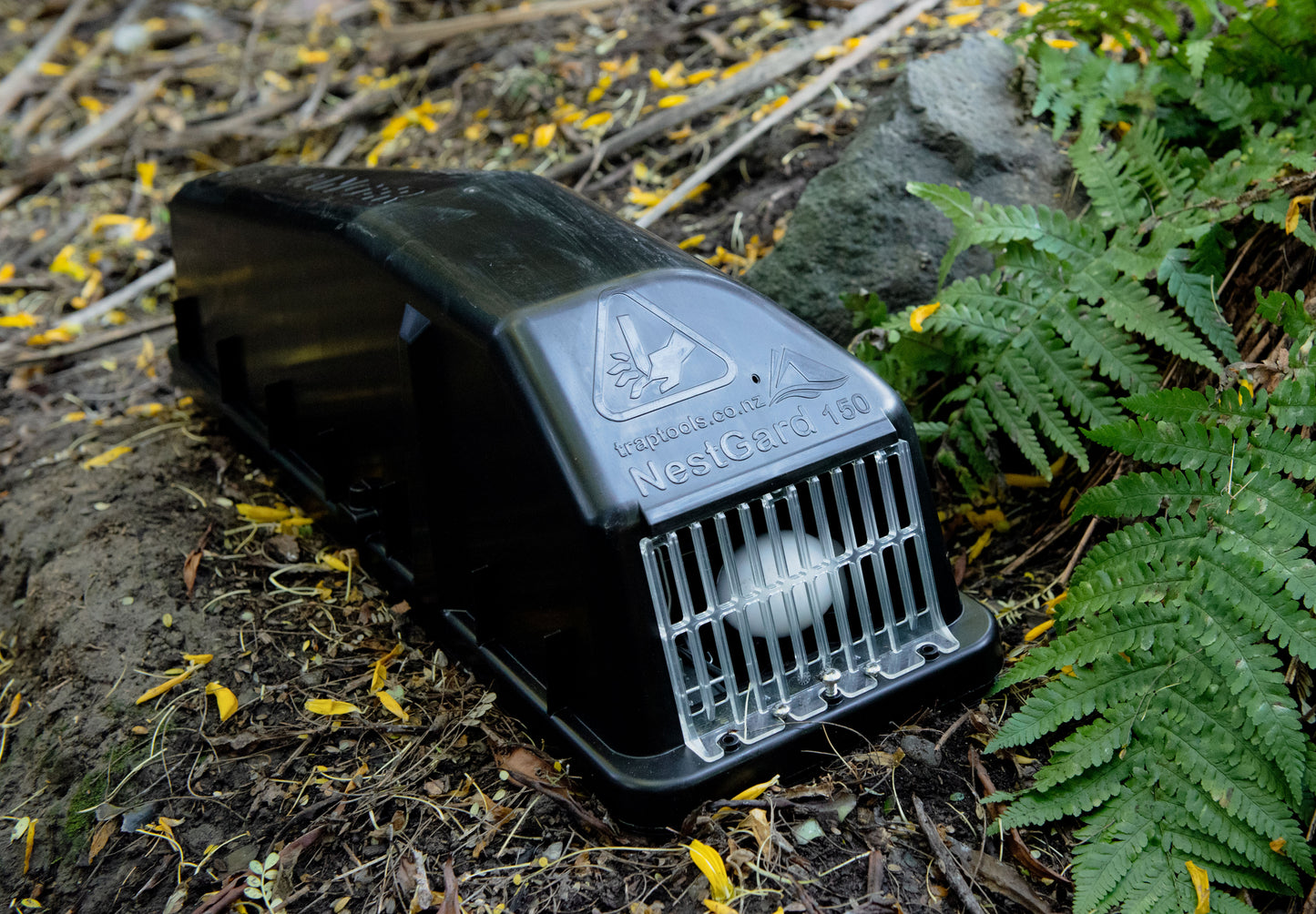
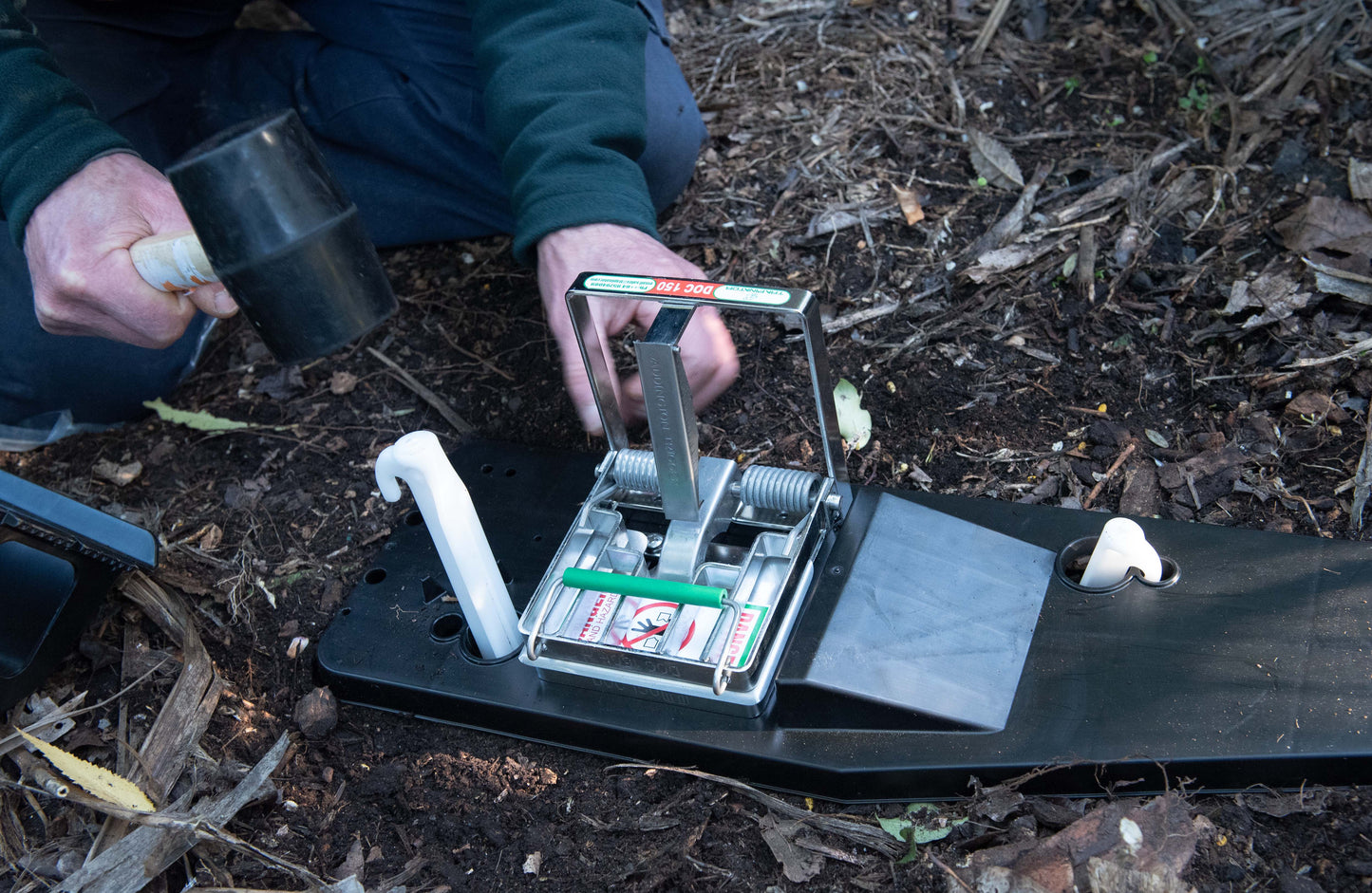
The NestGard150 is a lightweight, stackable and robust enclosure for the DOC150.
The DOC150 is a smaller and lighter version of the DOC200. But they both share the same spring, so therefore both have the same killing power.
We chose the DOC150 to base our NestGard enclosure on, so that the combined enclosure and trap were as light as possible, weighing a mere 2.1kg.
NestGard is a trademark of Trap Tools Ltd.
Request a quote
Request a quote
Ordering via DOC Purchasing
Please quote Trap Tool's DOC Vendor Number 114374 when placing your order via DOC Purchasing,
Ask us a Question
Ask us a Question
Have a question or feedback? Get in touch! sales@traptools.co.nz

NestGard Advantages
-
Lightweight and stackable
1.2kg (2.1kg with trap), for easier deployment in the backcountry
-
Strong and robust
to resist snow loading, falling branches, etc
-
Lid detaches completely
for easier cleaning, rebaiting and resetting
-
Lid locked down by screw,
essential if public or kea are present
-
Ramp approach to trap treadle
so animal doesn't step up to trap, which may cause misfires
-
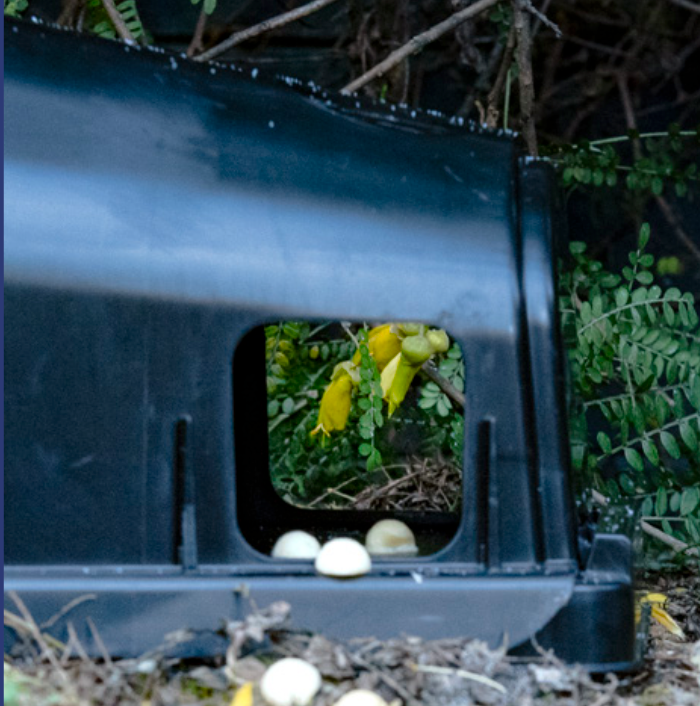
Run-through side entry variant,
which may be less intimidating for predators to enter than a front entry
-
Front entry can be enlarged
for targeting hedgehogs
-
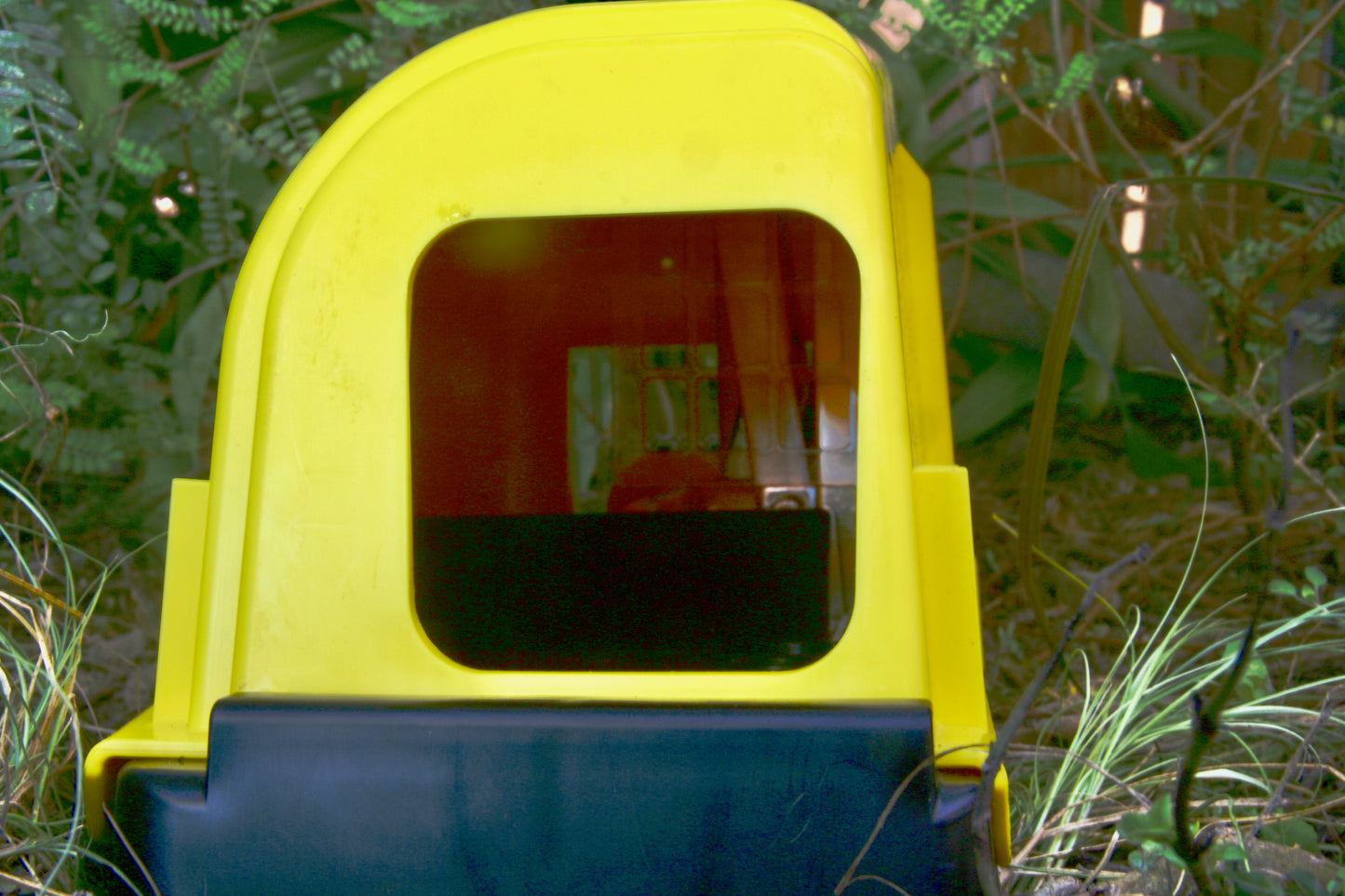
Yellow lid option available (front entrance only),
which may be more attractive to mustelids than black, and easier to find
-
Designed for the DOC150
since it has same spring and killing power as the DOC200, but is smaller and lighter
-
Dimensions selected to meet DOC requirements
to exclude kiwi, weka and kea
-
Transparent rear grille and centre baffle
are easily installed in the field
-
Designed by trappers, and manufactured in Christchurch NZ
from UV resistant, recyclable plastic
Frequently Asked Questions
Why didn't you design NestGard for the DOC200?
We wanted a box and trap combination that was as light as possible, for use in the backcountry. Since the DOC150 is lighter and smaller (and so requires a smaller box), we settled on that.The resulting trap & box combination weighs just 2.1 kg.
The DOC150 has the same spring as the DOC 200, so therefore they both have exactly the same killing power.
Some people find the DOC150 harder to set than the DOC200, because the lever arm is shorter, and hence more force is required. However, the latest DOC150s have a wider handle. This means that you can get all four fingers under it, rather than just two, making setting easier.
Does NestGard meet the NAWAC guidelines?
DOC's Trap Technology Advisory Group (TTAG) has assessed the NestGard150 and found it to be equivalent to other trap tunnels that conform to animal welfare standards (NAWAC); consequently it has been added to DOC's Trap Systems Performance Standards sheets, so is acceptable for use on the conservation estate.
Can NestGard be used where kiwi or weka are present?
DOC's Trap Technology Advisory Group has found that it meets the design requirements for use in kiwi and weka country.
Can NestGard be used where kea are present?
When working in an area where kea are present, the design standard requires a stamped metal grille. Our standard model NestGard has a polycarbonate moulded grille; polycarbonate is a very strong material, used in applications such as helmets and bulletproof shields, so we expect that this will perform well in such areas. This has been considered by DOC's Trap Technology Advisory Group, and a watch should be kept on the performance of the devices. However, we do have the option to provide metal grilles if required.
What exactly does the ramp achieve?
Conventional trap enclosures require the pest to step up approx 25mm to reach the treadle of the DOC traps, and consequently the pest is in a good position for reversing from the kill zone. Recent video recordings published by ZIP show a rat is able to trigger a DOC200 and back out of the kill zone before the killbar hits it. NestGard has an approx 7mm step-down from the ramp onto the trap treadle. It will be harder for a pest to escape the kill zone when they need to go backwards uphill.
Why would anyone choose a yellow lid?
Billy Hamilton in his paper "Using colour to increase stoat (Mustela erminea) trap catch" (www.doc.govt.nz/documents/science-and-technical/dsis187.pdf) reports that "Stoats had a higher probability of being caught in traps with yellow covers than those of other colours, and in traps with bright covers (yellow and red) than in those with duller covers (green and black)."
They're also easier to find in the bush than black.
Why would I choose a side entry over a front entry?
Rats are prey as well as predators, so they are nervous about new things in the environment (scientists call this neophobic), and they can be hesitant to enter tunnels. Using trail cameras we found that they like to run through tunnels which allows them to more safely test whether the tunnel is safe to enter. The double side entry encourages rats to engage with the device; edible lures can be placed in the run-through region so that rats can pick it up and learn that there is yummy food inside NestGard..
Installation Instructions

